News

MRI NEWSLETTER: Sinus Tarsi Syndrome

The sinus tarsi syndrome is not new, it was described by Denis O’Connor in 1958. However, the arthroscopic treatment of sinus tarsi is relatively new. The surgical treatment of sinus tarsi syndrome is arthroscopic debridement of the posterior or subtalar joint and sinus tarsi. 94% were improved at 1-8 years follow-up although half had some residual symptoms.

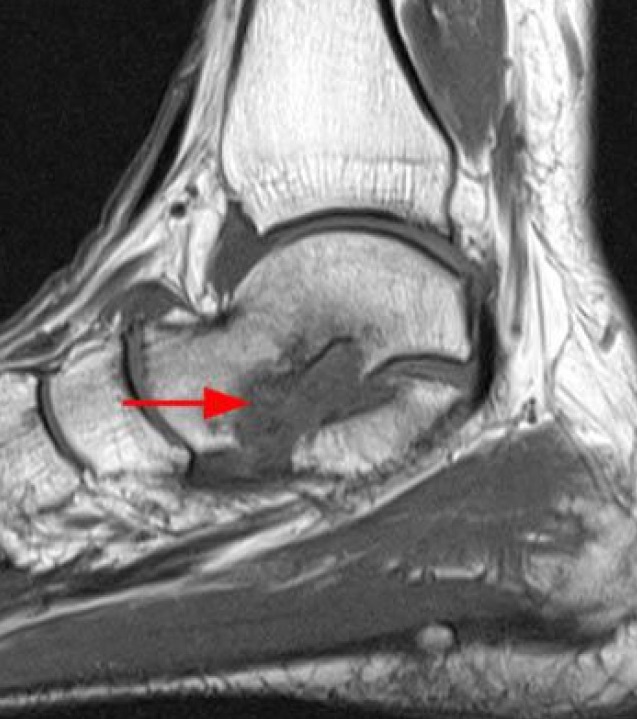
Coronal T1 and Sagittal T2 of ankle:
Sinus tarsi reveals obliteration of normal fat on T1 and low signal on T2 consistent with arthrofibrosis. The cervical and interosseous ligaments are obscured.

Sinus tarsi syndrome is an inflammatory condition causing lateral hindfoot pain and instability. The most common cause for the syndrome is ankle trauma (about 70%) in particular an inversion injury, which can be treated with steroid injection into the sinus tarsi. A more serious case of sinus tarsi syndrome is posterior tibial tendon dysfunction and spring ligament tears which frequently lead to the syndrome.

Arthroscopic Path Findings:
– tear of interosseous ligament 88%
– tear of cervical ligament 33%
– synovitis 55%
– arthofibrosis 24%
– soft tissue impingement 21%
– obliteration of fat that reaches the critical angle of gissane

The sinus tarsi contain the cervical ligament and the intraosseous ligament, and the 3 roots of the inferior extensor retinaculum (medial, intermediate and lateral). The cervical ligament is the thickest and anterior-lateral to the intraosseous ligament (ITO). In between the cervical ligament and the intraosseous ligaments are the 3 roots of the inferior extensor retinaculum which make up most of the ligamentous structures within the sinus tarsus. The roots act as a sling to hold the extensor digitorum longus and peroneus tertius tendons against the talus and calcaneus.

On MRI, findings suggestive of sinus tarsi syndrome include:
– obliteration of the fat by intermediate to low T1 and variable T2 signal intensity tissue
– tears of the interosseous and cervical ligaments
– cystic change along the roof and posterior subtalar joint osteoarthritis

Read the full article here: Sinus Tarsi Syndrome
By Dr William Renner

Back to News